
An Interview Excerpt with Dr Peter Davis - The Anti-Genius
Updated: May 15
Enjoy an excerpt from Dr Peter Davis's interview done by an anonymous New York Time's retired reporter.
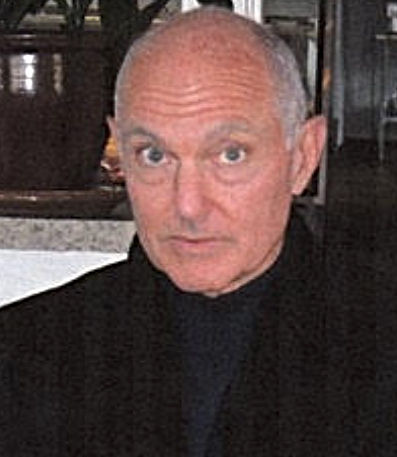
The Awakened Lifestyle
PD: When you are awake you know it; everything is different, just like in the morning; everything speaks directly to you. You take the necessary action. You notice anomalies, details that you would otherwise never notice. You become aware that you are dreaming. This phenomenon is nearly identical to waking in a lucid dream at night. Awake, you can take action that otherwise you wouldn't dare! You can act. You can fly. Awakened, night or day, you feel the motion, the movement through you, as if the outsides are your insides. When you awaken with someone else, so that both of you are awake, this is one of the greatest experiences one can ever have. The joy is explosive! There are no religious implications. However, true conscience comes with awakening, you realize that you must hold fast to a higher way of life, that all beings around you are depending on you no matter what they say or do.
NYT: That sounds burdensome.
PD: And that is why we do not awaken before our time: the burden would be too great for us. And the terror would be too much. But remember, even though humans do not know this, we all live constantly on the edge, in the dreaming world where the world of objects and the world of energies mix and meet. We are always dreaming, we do not live in the real. By waking we feel joy in our dream and for moments we can glimpse the edge of the real.
NYT: Terror? I still want you to describe awakening in more detail, even if it seems impossible.
PD: Being awake does not come from the human mind; awakening is an insight from the deep silence of the universe. The root of all and everything in us is realized during the insight of being awake. It is not thought, but the origin of the universe that is awake in us.
NYT: That shot by me. Please keep going.
PD: The "reality" we live in is fake, a sham. The wall of armoring makes this so. When we are awake we see that all the meaning in the events around us is meaning we have given to these events. We are projectors of meaning, or as I say in my book "information processing devices." Psychologists and physicians must understand this, otherwise psychology and psychiatry will remain in the dark ages. Even physics in its quantum description tells us that we, "the observer" to the scientist, project our consciousness and meaning into all events, "the experimental field" to the scientist. In sum, we are dreaming a "reality" that is a dream filtered through our very limited perceptual, sensory system, our armor. Even "time" is just our perception of the mechanics of energy.
NYT: So, how do we wake up, at least into a better or happier dream?
PD: For one, give yourself lucid dreams during the night. You can learn to do this, everyone can.
NYT: So an awakened person knows they are dreaming. Right? And like a sleeping person he could wake himself up if he is having nightmares?
PD: Yes, but — that is why teachers of consciousness exist, to show us that this is the case and that awakening is possible. Then we may be able to do it for ourselves. Please understand that to be conscious as I use the term is very rare. We do not accept this. Consciousness is a peculiar form of awareness. Believe it or not we do not need consciousness to think, or reason, or operate in life. Our very existence as a species proves it.
Are you conscious of yourself sitting here with me? How often do you wake up while we are sitting here together? Where are we? Are you conscious of that? For how long can one hold consciousness of a particular object or state? There is much more to being conscious than just being able to talk and so on. Consciousness has levels as well as qualities and quantities.
NYT: Overall, what is the current state of modern psychology? I know that the west is now absorbing some Buddhist psychology and philosophy into its own framework. Are we making progress in understanding ourselves?
PD: You may not like my answer. If this is too radical tell me to shut up. First of all we can only understand humans in the present state by projecting the psychology of the future, that is, what human beings might become. Then, looking backwards from the future we may begin to grasp the dilemma we are in presently. We must understand that humans as biologically evolving entities have come to an end. We have run out of time. We will from now on evolve only in two ways: through the act of conscious evolution and through a symbiotic bonding with technology, specifically embedding technology within our brain and body. These two evolutions are very different paths but not altogether incompatible.
NYT: Natural conscious evolution takes great effort. Biotechnological evolution just requires a little courage, science and the wealth to afford it.
PD: Remember, the game is survival. For the very wealthy, installing power and knowledge-enhancing biochips is a no-brainer, as this would make one, and one's children, competitive beyond the reach of all other humans. Conscious evolution yields wisdom; biochip enhancement does not.
NYT: You said earlier that we must become "different beings." What do you mean by that? Are you referring to a Nietzschean superman?
PD: I would go further and sideways of that. We, as individuals, do not look in the mirror — the mirror of our memory and consciousness — so we do not know ourselves. Let us imagine that a future human power is the power to know oneself as one actually is. But men and women assume they already know themselves, far too often. Until we realize that we don't know who or what we are, we will never make the effort to find out. We must first confess ignorance.
NYT: I get your point. But clarify — what would it mean to know oneself?
PD: If one wanted to know oneself one would get to know oneself as a "what," not so much as a "who." What kind of "thing" am I? Inner silence is necessary for this, so is action. If you ask everyone you know who you are and what you are like you will gather essential information for getting to know yourself. Yet most of this information would be expendable junk.
We want vast wealth, but most who have it have no idea what to do with it and lose their souls; hence, endless wars defending our palaces and for dominating natural resources. Too much material wealth enslaves the human soul. We cannot "have it all." Remember, I have been a long time student of Napoleon Hill, the father of a "positive mental attitude," and the concept of attaining both spiritual and material wealth. I know a little of what I speak. We imagine we will develop telepathy, clairvoyance, the power to control others' minds, healing powers, creative powers and all sorts of future powers that can only come after the development of so many abilities that we do not presently have but fantasize that we possess. Gurus, psychics, evangelists and fortune-tellers make fortunes from our ignorance.
NYT: I like to ask this question of anyone I think might have a useful answer. What is power and how do I get it?
PD: A simple definition of power is the ability to get what you want and need. But this definition is tricky. Wants are endless and needs are few. As you evolve into the future species you will have fewer and different wants and your needs will alter. I knew a man who was powerful in that he could always get beautiful women to have sex with him. Other men envied him greatly. But later, this same man no longer wanted these women and he found he had lost his power for everything else, too. Another man I knew wanted money and property. He acquired millions and vast property, but also AIDS. So, to really have power we must be powerful in all three force centers — mental, emotional and physical — then we have a chance to carry our power to the grave.
NYT: I'm hearing something, but is power energy or influence over others or the ability to pass on one's genetics, or all of this and much more?
PD: You are asking essentially: What is love? Or, what is the sky? We will never know what anything is. But certainly one's mind must be powerful above all else. One's emotions and body must obey and be in harmony with the intentions of the mind. The mind must be free and full of spirit.
In esoteric Buddhism there are two minds, the kama-manas (the lower, desiring mind) and buddhi-manas (the higher, universal mind). We are speaking of the buddhi-manas.
NYT: And how do I do that? How do I make my mind free and full of spirit?
PD: Essentially you practice doing that! I know that seems like putting the cart before the donkey. Strange as it seems, learning the skill of delaying gratification is central to acquiring true power. You must be inwardly silent, alone and still to learn this art. Inner silence is the gateway to power. Wear airplane mechanic mufflers on your ears when you are at home. This will get you used to silence and block out noise pollution like cars, radio and TV. When you consider this seriously you will see the wisdom of it. Find some way to put your power into action. Make something, create something, or involve yourself in a way that takes all your power.


Comments